


Author: Scott Bredemann
Updated: 5/1/2026 | Read Time: 5mins
Carriage bolts and hex bolts are both common fasteners, but they are designed for different types of connections. A carriage bolt has a smooth, rounded head with a square neck beneath it, which helps prevent the bolt from turning once it is seated. A hex bolt has a six-sided head that can be tightened or loosened with a wrench or socket, making it more practical for assemblies that need controlled tightening or future adjustment. The best choice depends on the material being fastened, the required strength, and how much access there is during installation.
What Is a Carriage Bolt?
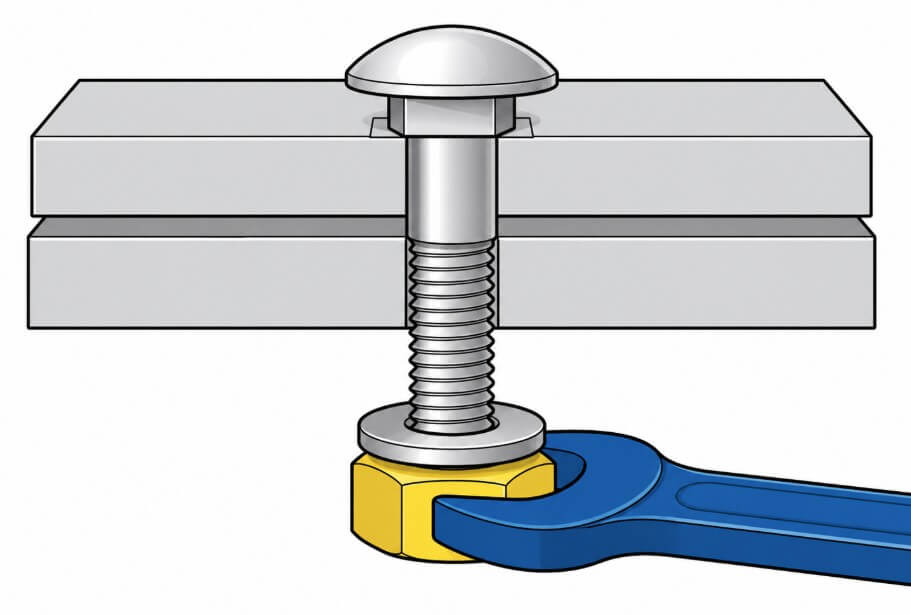
A carriage bolt is a threaded fastener with a rounded head and a short square section directly beneath the head. That square section is one of its most important features. When the bolt is installed into wood or a properly shaped hole, the square neck bites into the material and helps hold the bolt in place while the nut is tightened from the opposite side.
Unlike fasteners that are driven from the head, carriage bolts are usually installed by pushing the bolt through a pre-drilled hole and tightening a nut on the threaded end. This makes them useful in assemblies where the head side should remain smooth, exposed, or harder to tamper with. They are commonly used in wood construction, fences, decks, gates, furniture, and wood-to-metal connections where a clean finished surface is needed on one side of the assembly.
What Is a Hex Bolt?
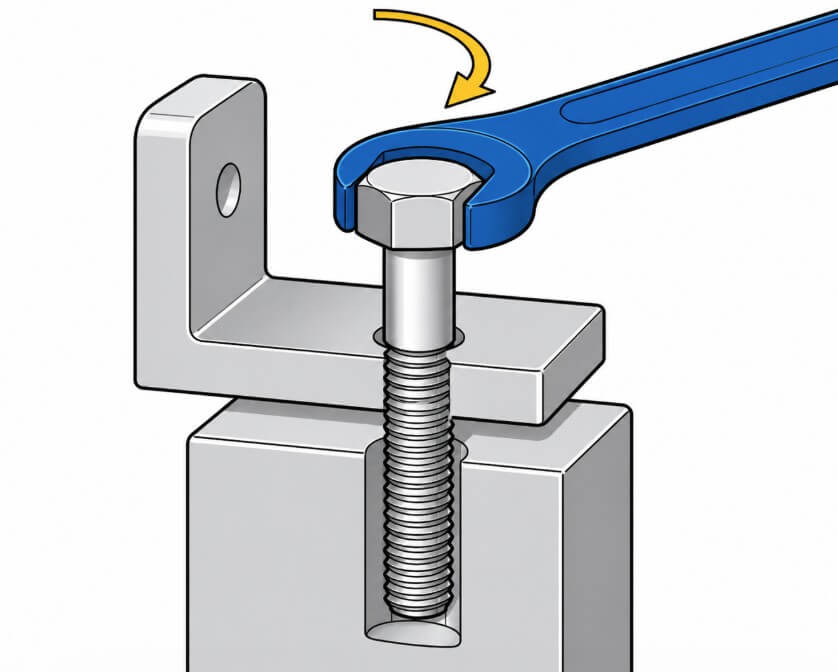
A hex bolt is a threaded fastener with a six-sided head designed to be turned with a wrench, socket, or other standard hand tool. This tool-friendly head shape is what makes hex bolts especially useful in assemblies where the fastener needs to be tightened to a specific level, removed for maintenance, or adjusted after installation.
Hex bolts are commonly used with a nut, but they may also be installed into a tapped hole when the mating part already has internal threads. They are often used in metal brackets, equipment frames, machinery, automotive components, and structural connections because they allow strong clamping force between parts. Depending on the application, a washer may also be used under the head, under the nut, or both to help distribute load and protect the surface of the material.
Carriage Bolt vs. Hex Bolt Comparison Table
| Feature | Carriage Bolts | Hex Bolts |
|---|---|---|
| Head Style | Rounded, smooth head with no drive slot or wrenching surface. | Six-sided head designed for use with a wrench or socket. |
| Installation Method | Inserted through a hole and usually tightened from the nut side. | Can be tightened from the head side, nut side, or both depending on the assembly. |
| Anti-Rotation Feature | Square neck under the head helps prevent the bolt from spinning when seated properly. | No built-in anti-rotation feature; the head is held with a wrench if needed. |
| Common Materials | Often used in wood, wood-to-metal, fencing, decking, and furniture assemblies. | Common in metal-to-metal fastening, machinery, frames, brackets, and structural joints. |
| Finished Appearance | Provides a clean, low-profile exposed head. | Leaves a visible hex head that is more functional than decorative. |
| Serviceability | Less convenient to remove if the square neck no longer holds securely. | Easier to loosen, retighten, or replace because the head can be gripped with a tool. |
| Strength Options | Available in different strengths, but commonly used in lighter-duty or wood-based assemblies. | Available in a wide range of grades, including high-strength options such as Grade 8 bolts. |
| Best Use | Best for smooth-head fastening in wood, outdoor structures, gates, decks, and furniture. | Best for machinery, metal brackets, equipment frames, and assemblies requiring controlled tightening. |
Where to Use Each
Carriage Bolts
- Deck framing and railings
- Fences and gates
- Outdoor benches and furniture
- Wood-to-metal brackets
- Playground equipment
- Dock and boardwalk assemblies
- Agricultural and utility structures
- Light structural wood connections
Hex Bolts
- Machinery and equipment frames
- Metal brackets and mounting plates
- Automotive assemblies
- Structural steel connections
- Conveyor systems
- Industrial workstations and fixtures
- Maintenance-heavy assemblies
- Higher-load applications that may require stronger fasteners, such as Grade 8 bolts.
Parting Thoughts
MISUMI USA carries a wide range of screws & bolts, including – carriage bolts, hex bolts, screws, washers, and more. If you have any questions about fastening concerns for your next project or fix, please feel free to contact our product experts, and engineers. For more insights about fasteners, and other manufacturing related articles be sure to check out our blog, and articles like – Bolt Grade Chart, Metric Bolt Torque Chart, and more.
Disclaimer:
The content on this webpage is for informational purposes only. MISUMI makes no guarantees, expressed or implied, regarding the accuracy, completeness, or validity of the information. Performance parameters, tolerances, designs, materials, or processes should not be assumed to reflect third-party suppliers’ or manufacturers’ deliverables within MISUMI’s network. Buyers are responsible for specifying their part requirements.