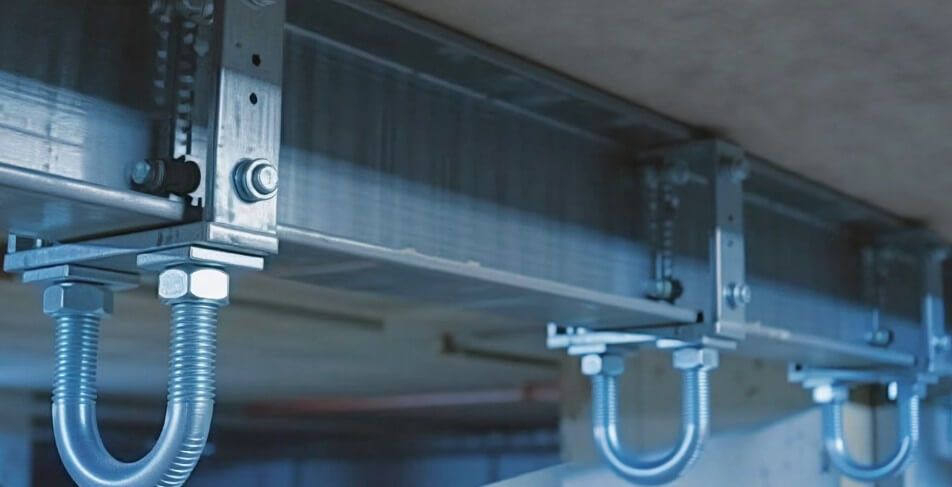
Polyurethane is a polymer material that absorbs impact from the workpiece and helps prevent damage to equipment or surfaces. Other use cases can be for load distribution, sealing, or providing insulation. Polyurethane is known for its durability, flexibility, wear resistance, and weather resistance.
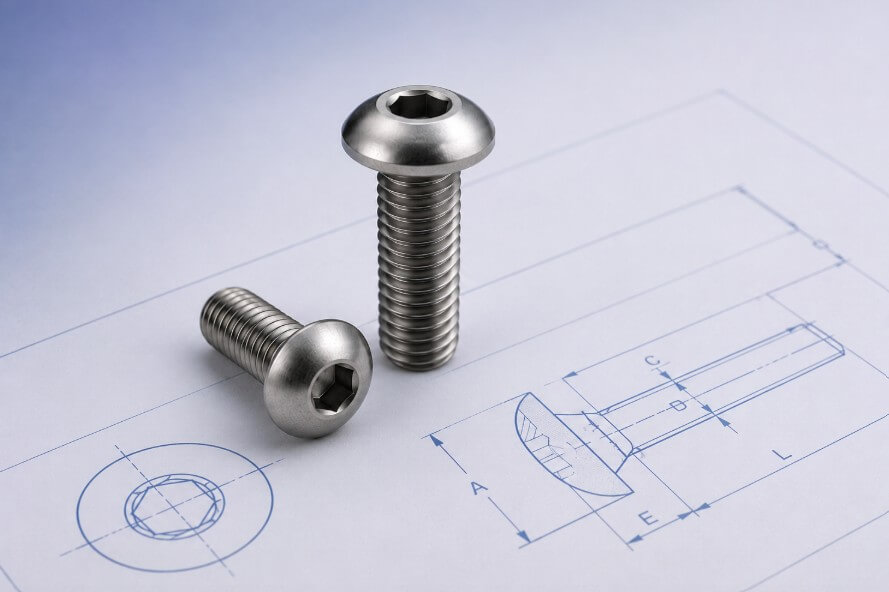
Polyurethane is commonly used with pushers, stoppers, or bumpers, but can also be used with certain bolts and conveyor rollers. Plates and sheets of raw polyurethane material are also available.
In this polyurethane material guide, you’ll learn the advantages, types, and how it compares to rubber.
Advantages of Polyurethane Material
Excellent mechanical strength and abrasion resistance are the two main properties of polyurethane that most grades of polyurethane provide.
In addition to this, there are many other reasons to use polyurethane over other materials. Here are the top benefits of choosing polyurethane.
1. Hardness
Polyurethane has a wide range of hardness. It can be formulated to be soft and flexible or hard and rigid.
The most common category of hardness is indicated by Shore A. This scale generally ranges from Shore A30 to Shore A90, measured by using a type-A Durometer. Another way to quantify hardness is by using the Asker C scale. With both indications, the larger value means a harder material. Generally, as the hardness increases, impact resilience increases while elongation percentage decreases.
2. Load Bearing Capacity
Polyurethane is a much softer and lighter material than most metals, which makes it a great candidate to use in shock-absorbing applications. Polyurethane is a strong enough material to withstand high forces but is resilient and compressible compared to other materials.
3. Abrasion Resistance
Materials with high abrasion resistance are important when withstanding surface wear over long periods of time. One of the most common properties of most types of polyurethane is its great abrasion resistance.
For general polyurethane, we have performed abrasion tests using the Taber Method to find an abraded volume of 197.3 mm3 (these values are not guaranteed but measured from our testing).
4. Adhesion to Materials and Plastics
When polyurethane is used in combination with metals or plastics, there are many ways they can be assembled. When used with metals, polyurethane is either bonded to the metal piece or baked directly onto the metal. Certain products may have the option to come with adhesive tape on one side of the polyurethane for easy adhesion to plastics.
Comparison of Polyurethane Material Types
General polyurethane is commonly used across all industries, but it may not be best suited for the job depending on your application. Luckily, there are several different types of polyurethane to choose from.
| General (Ether, Ester Polyurethane) | Antistatic | Low Rebound | Heat Resistant | Super Abrasion Resistant (Vulkollan®) | Abrasion Resistant | Ceramic |
| Ideal for Repeat Use Shock Absorbent | Excels in Antistatic Effect Good Mechanical Strength | Compression Resistant Difficult to Deform | Heat resistant up to 120°C | Abrasion Resistant High Load Bearing | Abrasion Resistant | Abrasion Resistant Smooth, Machined Surface |
General (Ether & Ester Polyurethane)


General polyurethane is commonly used across many different industries due to its excellent mechanical strength and great abrasion resistance. Ether polyurethanes are Shore A95 and A90, while Ester polyurethanes are Shore A70, A50, and A30. These materials are both suitable for sealing or shock-absorbing applications.
The table below shows which type of Ether versus Ester polyurethane has superior properties. The main downside to general polyurethane is its weak chemical and temperature resistance.
General Polyurethane Properties Overview
| Properties | Ether Type (Shore A95, A90) | Ester Type (Shore A70, A50, A30) |
|---|---|---|
| Tensile Strength | O | |
| Elongation | O | |
| Tear Strength | O | |
| Impact Resilience | O | |
| Abrasion Resistance | O (Shock Wear) | O (Slip Wear) |
| Shock Wear | O | |
| Hydrolysis Resistance | O | |
| Oil Resistance | O | |
| Strength | O | |
| Durability | O | |
| Acid Resistance, Alkali Resistance | O |
Antistatic

Antistatic polyurethane has similar properties to general polyurethane, except with surface resistivity properties. This is commonly used in systems directly exposed to electronics. If your application does not specifically need to be protected with antistatic properties, then a general polyurethane would likely be better suited.
Characteristic values for antistatic polyurethane can be found below.
| Specific Volume Resistivity | 2.1×10⁸ Ω·cm |
| Surface Resistivity | 4.0×10⁹ Ω |
Low Rebound

Low-rebound polyurethane excels in compression resistance, which makes it difficult to deform over time. In compression set tests, low-rebound polyurethane was found to have a compression set of 1% compared to the 25% from general polyurethane.
Due to this, this type of material is best suited for shock-absorbing applications with high loads. Low rebound polyurethane is not suited for large impact applications due to its weaker tensile strength and elongation.
Heat Resistant

If your application is under high temperatures, heat-resistant polyurethane would be the best option. This polyurethane is designed to maintain its high material strength up to temperatures as high as 120°C.
Like antistatic urethane, if your application does not specifically need to run in a high temperature environment, then you are likely better off using a general polyurethane instead.
Abrasion Resistant

Abrasion-resistant polyurethane offers additional protection to abrasion resistance. This unique material composition allows for 2.5x higher abrasion resistance than general polyurethane, which helps reduce exchange frequency.
This material works great in high-friction, high-cycle applications while allowing longer replacement intervals.
Super Abrasion Resistant (Vulkollan®)

Vulkollan® is a super abrasion-resistant polyurethane that is far superior to general polyurethane in abrasion resistance and load bearing. The abrasion resistance is about 6x higher, and the material strength is about 1.5x higher than general polyurethane.
Similar to abrasion resistant polyurethane, Vulkollan® is a great option to combat surface wear from high usage. Over time, this material may discolor, but this does not affect the physical properties.
Ceramic

Ceramic polyurethane excels in abrasion resistance and has a smooth machined surface despite its low hardness. While abrasion resistant and Vulkollan® polyurethanes are resistant to “surface” abrasion, ceramic polyurethane is resistant to “line” abrasion.
Ceramic polyurethane will also compress more than general polyurethane under the same loads, while also being about 2x more abrasion resistant than general polyurethane. If this type of polyurethane gets damaged or scraped from contact, it may produce some dust.
Polyurethane Materials Compared to Rubber
Polyurethane and rubber can be seen as similar materials, but there are certain advantages to using polyurethane instead of rubber. One of the main reasons is due to its excellent mechanical strength. This allows for great vibration dampening properties while still maintaining a strong material composition to avoid tearing.
In addition to high mechanical strength, polyurethane has much higher abrasion resistance properties compared to many rubbers. Polyurethane has many different types, as shown above, that are made specifically for applications that would take high loads for longer intervals.
As an example, a bumper made from polyurethane would likely last longer than one made from rubber if used as a cushion for shock absorption.
When comparing low rebound polyurethane to low elasticity rubber, the polyurethane showed better rebound resilience at room temperature and significantly better rebound resilience at lower temperatures.
Rubbers may be chosen over polyurethane in cases where weather resistance or chemical resistance are important in the application. While certain types of polyurethane may have better heat-resistant properties, certain rubbers can operate much better in high heat and humidity applications. Many rubbers are naturally much more chemical-resistant than polyurethane as well, as polyurethane only has excellent oil resistance properties.
| Polyurethane | Rubber | |
| Advantages | -Durable -Oil Resistant -Higher Load Capacity -Heat Resistant | -Flexible -Chemical Resistant -Cost-Effective -Biodegradable |
| Disadvantages | -More Costly -Less Flexible | -Less Durable -Lower Load Capacity |
Configurable Bolts, Pushers, and Stoppers
MISUMI offers a wide range of rubbers, bolts, and stoppers with different material options. Explore our products: