

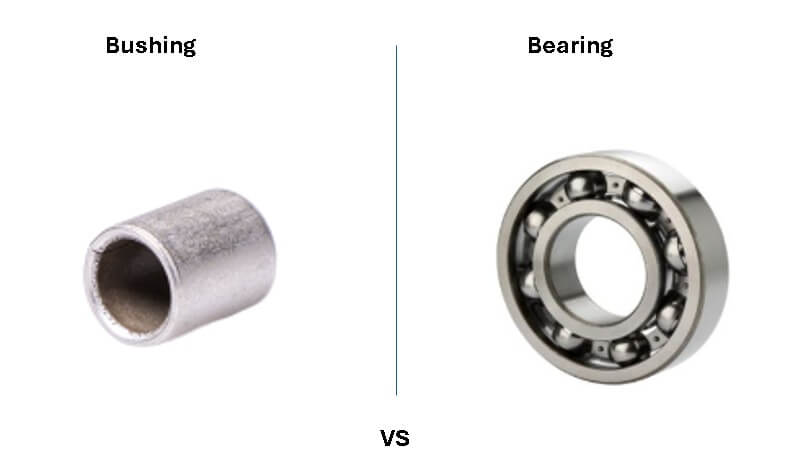
Bushings and bearings are two of the most common components used to reduce friction between moving parts, yet they work in different ways and are suited for different applications. While both serve the same basic purpose—supporting motion and minimizing wear—their design, materials, and performance characteristics vary significantly. This article explores the key differences between bushings and bearings, their advantages, and when one might be a better choice than the other.
What are Bearings?
A bearing allows parts to move smoothly by reducing friction between surfaces that would otherwise grind against each other. Instead of relying on direct sliding contact, most bearings use rolling elements—such as balls, rollers, or needles—housed between inner and outer rings to support loads and guide motion with minimal resistance. This design makes them ideal for applications requiring high rotational speeds, precise alignment, and efficient energy transfer, such as motors, gear assemblies, and heavy industrial equipment. By distributing loads evenly and minimizing wear, bearings help ensure reliable performance and longer service life for machinery.
What are Bushings?
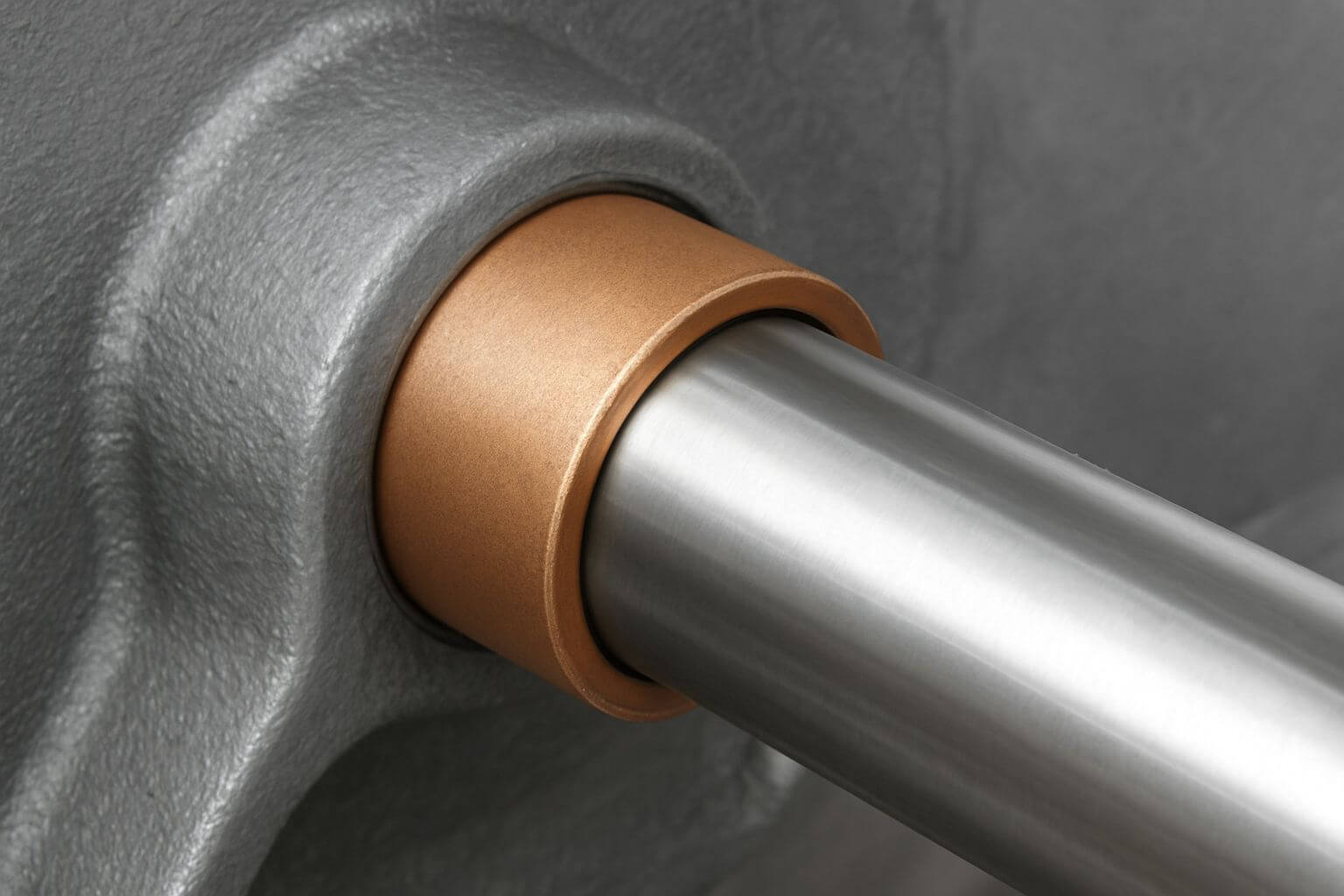
A bushing is a simple yet effective component designed to reduce friction and wear between two surfaces that slide against each other. Unlike bearings, which rely on rolling elements, bushings provide a smooth, stationary sleeve—often made of bronze, plastic, or composite materials—through which a shaft or other moving part passes. They are commonly used in applications where movement is slower, loads are heavier, or space is limited, such as hinges, pivot points, or machinery subject to vibration. By absorbing impact and distributing forces, bushings help protect both the moving parts and the housing, contributing to longer service life and reliable operation.

Coefficient of Friction: Bearings vs. Bushings Table
Coefficient of Friction Comparison
| Type & Material | Coefficient of Friction (μ) | Application Notes | Operating Conditions |
|---|---|---|---|
| BEARINGS | |||
| Ball Bearing (Steel on Steel) | 0.001 – 0.0015 | High-speed applications, precision machinery | Clean, lubricated conditions |
| Roller Bearing (Steel) | 0.0015 – 0.002 | Heavy load applications, automotive | Proper lubrication required |
| Ceramic Ball Bearing | 0.0008 – 0.0012 | High-temperature, corrosive environments | Minimal lubrication needed |
| Needle Bearing | 0.002 – 0.004 | Space-constrained applications | Light to medium loads |
| Thrust Bearing | 0.0015 – 0.003 | Axial load applications | Controlled lubrication |
| BUSHINGS | |||
| Bronze Bushing | 0.08 – 0.15 | Marine applications, pumps | Water or oil lubricated |
| PTFE (Teflon) Bushing | 0.04 – 0.08 | Food grade, chemical resistant | Dry running capability |
| Nylon Bushing | 0.15 – 0.25 | Light duty, quiet operation | Dry or lightly lubricated |
| Graphite Impregnated | 0.05 – 0.12 | High-temperature applications | Self-lubricating properties |
| Rubber Bushing | 0.6 – 1.2 | Vibration dampening, automotive | Designed for compliance, not rotation |
| Steel Bushing (Dry) | 0.4 – 0.6 | Heavy duty, temporary applications | Requires regular lubrication |
| Composite Bushing | 0.08 – 0.18 | Maintenance-free applications | Self-lubricating, various environments |
Physical Properties: Bearings vs. Bushings Table
| Feature | Bushings | Bearings |
| Type of Motion | Sliding motion between surfaces | Rolling motion via balls, rollers, or needles |
| Friction | Higher friction compared to bearings, but often self-lubricating | Lower friction due to rolling elements |
| Load Capacity | Handles heavier static loads well | Excels at supporting dynamic loads and high-speed rotation |
| Precision | Suitable for applications with less critical alignment | Ideal for applications requiring precise alignment and smooth motion |
| Maintenance | Often low-maintenance; some types are self-lubricating | May require lubrication and periodic inspection |
| Common Materials | Bronze, plastic, composite, graphite, PTFE | Steel, stainless steel, ceramic, hybrid combinations |
| Typical Applications | Hinges, pivot points, agricultural equipment, heavy machinery | Motors, gearboxes, conveyors, robotics, precision instruments |
Advantages and Disadvantages
Bearings are valued for their ability to reduce friction to very low levels, allowing machinery to operate smoothly and efficiently, even at high speeds. They also offer precise alignment for rotating parts and can handle dynamic loads well, which helps extend equipment life. However, bearings can be more expensive due to their intricate design and may require regular lubrication or maintenance. They are also more sensitive to contamination from dust or debris, which can shorten their lifespan if not properly sealed or maintained.
Bushings, on the other hand, are simpler in design and generally more cost-effective. They excel at handling heavy static loads and absorbing shock or vibration, making them a reliable choice for slower-moving or high-impact applications. Many bushings are made from self-lubricating materials, which minimizes upkeep. The trade-off is that they typically have higher friction levels than bearings, making them less suitable for high-speed or precision applications. In systems with continuous motion, bushings may wear out faster and require more frequent replacement.
Parting Thoughts
MISUMI USA carries a large offering of bushings, and bearings, including: plain, self-lubricating, flanged, ball, roller, and more. If you have questions about selecting between the right bushing or bearing for your next project or repair, our product experts and engineers are ready to help. Be sure to explore our MechLab Blog for additional articles on bushings, including All About Bushings, Bronze vs. Brass: Differences, Advantages, and Disadvantages, and more.
Browse Bearings Browse BushingsAuthor: Scott Bredemann | Updated: 10/31/2025
Disclaimer:
The content on this webpage is for informational purposes only. MISUMI makes no guarantees, expressed or implied, regarding the accuracy, completeness, or validity of the information. Performance parameters, tolerances, designs, materials, or processes should not be assumed to reflect third-party suppliers’ or manufacturers’ deliverables within MISUMI’s network. Buyers are responsible for specifying their part requirements.