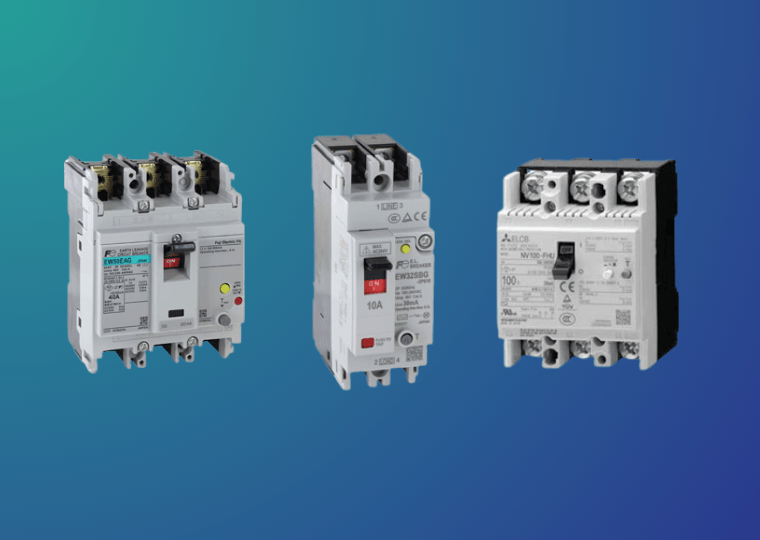
Mini circuit breakers (MCBs) are devices that protect electrical circuits from overcurrent, short circuit, and overload conditions. They are designed to automatically interrupt the flow of current when it exceeds a predetermined value, preventing damage to the circuit and the connected equipment. MCBs are widely used in residential, commercial, and industrial applications, as they offer a reliable and convenient way to isolate and reset circuits without replacing fuses or wires.
Types of Mini Circuit Breakers
There are different types of MCBs based on their tripping characteristics, which determine how quickly they respond to different levels of current.
The most common types are:
- Type B: These MCBs trip between 3 and 5 times the rated current. They are suitable for resistive loads, such as lighting circuits, domestic appliances, and general-purpose outlets.
- Type C: These MCBs trip between 5 and 10 times the rated current. They are suitable for inductive loads, such as motors, transformers, and solenoids.
- Type D: These MCBs trip between 10 and 20 times the rated current. They are suitable for highly inductive loads, such as welding machines, X-ray machines, and large motors.


Some MCBs also have additional features, such as:
- Thermal-magnetic
- These MCBs combine a bimetallic strip and an electromagnet to provide both thermal and magnetic protection. The bimetallic strip responds to the average current over time, while the electromagnet responds to the peak current in case of a short circuit.
- Residual current device (RCD)
- These MCBs detect the difference between the live and neutral currents, which indicates a leakage or fault to the earth. They trip when the residual current exceeds a certain value, typically 30 mA, to prevent electric shock and fire hazards.
- Arc fault detection device (AFDD)
- These MCBs detect the presence of an arc fault, which is a high-intensity discharge of electricity between two conductors. They trip when the arc fault exceeds a certain value, typically 75 A, to prevent fire hazards and damage to the insulation.

Benefits of Mini Circuit Breakers
MCBs offer several advantages over traditional fuses and other circuit protection devices, such as:
- Safety
- MCBs provide a high level of protection against overcurrent, short circuit, and overload conditions, which can cause fire, electric shock, and equipment damage. MCBs also have a low contact resistance and a high breaking capacity, which reduce the heat and energy loss in the circuit.
- Convenience
- MCBs are easy to install and use, as they do not require any tools or special skills. MCBs also have a clear indication of their status, which makes it easy to identify and isolate the faulty circuit. MCBs can be reset and reused multiple times, unlike fuses, which have to be replaced after each operation.
- Cost-effectiveness
- MCBs are relatively inexpensive and durable, as they have a long service life and require minimal maintenance. MCBs also save energy and reduce the operational costs of the circuit, as they prevent the wastage of current and the deterioration of the components.
To explore the full selection of Circuit Breakers including Mini Circuit Breakers, visit our product pages here.