


Author: Scott Bredemann
Updated: 02/18/2025
Lead is a dense, soft, and highly malleable metal that has been used in manufacturing for thousands of years. Recognized by its bluish-gray appearance and low melting point, lead stands out for its excellent corrosion resistance and ability to block radiation and sound. While its use has declined in consumer products due to health concerns, it remains an essential material in industries where its unique properties are difficult to replace.
What Is Lead?
Lead (Pb) is a heavy metal with an atomic number of 82, making it one of the densest naturally occurring elements. It is soft, highly malleable, and has a low melting point of 327.5°C (621.5°F), which allows it to be easily cast and shaped. Lead’s bluish-gray appearance dulls to a matte gray when exposed to air due to the formation of a protective oxide layer that helps prevent further corrosion.
One of lead’s defining characteristics is its high density—11.34 g/cm³—making it ideal for applications that require weight, such as ballast in marine vessels or counterweights in industrial machinery. It is also an excellent barrier against radiation, making it indispensable in medical imaging and nuclear shielding. Additionally, lead has strong sound-dampening properties and is used in acoustic insulation for industrial and construction applications.
A Brief History
Used by civilizations for over 6,000 years, valued for its abundance, low melting point, and ease of shaping. The earliest known lead artifacts date back to around 3800 BCE in Anatolia (modern-day Turkey). The ancient Egyptians, Greeks, and Romans extensively used lead for plumbing, cosmetics, and even food preservation, unaware of its toxic effects. The Roman Empire, in particular, relied heavily on lead for water pipes, coins, and construction materials—some historians speculate that widespread lead exposure contributed to Rome’s decline.
During the Middle Ages and Renaissance, lead remained crucial for stained glass windows, pigments, and weaponry. The Industrial Revolution further expanded its use in paints, batteries, and alloys. However, by the 20th century, scientists had confirmed the dangers of lead poisoning, leading to regulatory bans on leaded gasoline, paint, and plumbing.

Physical Properties of Lead
| Property | Value |
| Density | 11.34 g/cm³ |
| Melting Point | 327.5°C (621.5°F) |
| Boiling Point | 1,749°C (3,180°F) |
| Appearance | Bluish-gray, turns dull gray when exposed to air |
| Malleability | Very high, easily shaped and deformed |
| Corrosion Resistance | Forms protective oxide layer, resists rusting |
| Electrical Conductivity | Poor compared to metals like copper and aluminum |
| Sound Dampening | Excellent, used in acoustic insulation |
| Radiation Shielding | High, used in X-ray and nuclear shielding |
Chemical Properties of Lead
| Property | Description |
| Atomic Number | 82 |
| Atomic Mass | 207.2 u |
| Reactivity | Low; does not react easily with air or water |
| Corrosion Resistance | Forms a protective oxide layer, preventing further oxidation |
| Solubility | Insoluble in water but dissolves in acids like nitric acid |
| Toxicity | Highly toxic to humans and the environment |
| Compounds Formed | Lead(II) oxide (PbO), Lead(IV) oxide (PbO₂), Lead acetate (Pb(C₂H₃O₂)₂) |
| Reaction with Acids | Reacts with strong acids to form lead salts |
| Reaction with Bases | Reacts with strong bases to form lead hydroxides |
Mechanical Properties of Lead
| Property | Value/Description |
| Hardness | Very low (Mohs hardness: 1.5) |
| Tensile Strength | 12–17 MPa (extremely low compared to structural metals) |
| Yield Strength | ~5 MPa (varies with alloying) |
| Elastic Modulus | ~14 GPa (very low, making lead highly deformable) |
| Ductility | Very high; easily stretched and formed |
| Malleability | Extremely high; can be hammered or rolled into thin sheets |
| Impact Resistance | Low; lead deforms rather than fractures |
| Creep Resistance | Poor; deforms under constant stress over time |
| Friction Coefficient | High; lead has natural lubricating properties |
| Vibration Damping | Excellent; used in soundproofing and vibration control |
Types of Lead and Their Applications
Pure Lead (Soft Lead)
- Description: Unalloyed lead with high purity, very soft and malleable.
- Uses: Radiation shielding, roofing materials, lead-acid battery plates, and corrosion-resistant coatings.
Lead Alloys
- Lead-Antimony Alloy
- Description: Harder and more durable than pure lead, contains antimony for added strength.
- Uses: Battery grids, bullets, bearings, and type metal for printing presses.
- Lead-Tin Alloy
- Description: Improved solderability and corrosion resistance.
- Uses: Solder for electronics and plumbing, pewter, and organ pipes.
- Lead-Calcium Alloy
- Description: Provides better resistance to corrosion and creep compared to lead-antimony alloys.
- Uses: Maintenance-free lead-acid batteries, especially in automotive and industrial applications.
- Lead-Silver Alloy
- Description: Enhances mechanical strength and corrosion resistance.
- Uses: Used in specialized industrial applications, including nuclear reactors and high-performance batteries.
Red Lead
- Description: A bright red oxide of lead with high corrosion resistance.
- Uses: Anti-rust primer coatings for steel structures, battery plates, and glass production.
White Lead
- Description: A white pigment historically used in paints but now restricted due to toxicity.
- Uses: Historically used in paints, cosmetics, and ceramics; now limited to specialty applications.
Lead Dioxide
- Description: A dark brown, highly oxidizing form of lead.
- Uses: Used in lead-acid battery electrodes, pyrotechnics, and as an oxidizing agent in chemical reactions.
Lead Azide
- Description: A highly explosive lead compound.
- Uses: Used as a primary explosive in detonators and primers for firearms and explosives.
Lead Glass (Lead Crystal)
- Description: Glass containing lead oxide to enhance optical clarity and brilliance.
- Uses: High-quality glassware, radiation shielding in X-ray rooms, and optical lenses.
Lead-Based Solder
- Description: Alloy of lead and tin used for joining metal parts.
- Uses: Previously used in plumbing, electronics, and automotive industries (now restricted in many applications due to RoHS regulations).
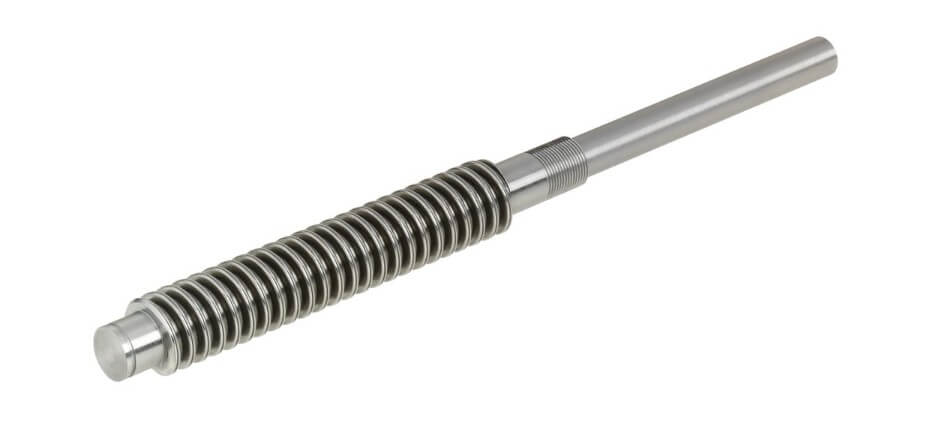
7 Applications of Lead Within Manufacturing
- Lead-Acid Batteries – Used in automotive, industrial, and backup power systems due to lead’s electrochemical properties.
- Radiation Shielding – Essential in X-ray rooms, nuclear power plants, and medical imaging equipment to block harmful radiation.
- Ammunition & Ballistics – Used in bullets and shot due to its high density and ease of molding.
- Solders & Alloys – Previously used in plumbing and electronics solder, though now restricted in many applications due to RoHS regulations.
- Corrosion-Resistant Coatings – Lead-based compounds are used in protective coatings for industrial structures, pipelines, and marine applications.
- Bearings & Mechanical Components – Lead is used in certain industrial bearings and machine components due to its lubricating properties.
- Cable Sheathing & Insulation – Historically used to protect electrical cables from moisture and mechanical damage, especially in harsh environments.
Parting Thoughts
We hope this deep dive into lead has given you valuable insights into its properties, applications, and importance in manufacturing. At MISUMI USA, we offer a wide range of standard and customizable lead and lead-coated components to meet your needs:
Looking for more insights on industrial metals? Explore our other articles covering steel, titanium, copper, aluminum, and zinc. Or, contact our product experts for choosing the best materials for your next project.