If you’ve spent anytime in the automation world, the terms AGV and AMR will come up at some point in time. While both are unmanned and pivotal in automating operations and improving efficiency, I originally found the difference in naming vague and considered it interchangeable.
It wasn’t until I started working with more warehouse automation customers that I began to understand the nuance in the naming convention and how they cater to different needs and offer distinct capabilities.
In this article, I breakdown the key differences between automated guided vehicles (AGV) and automated mobile robots (AMR).
What is an AGV?
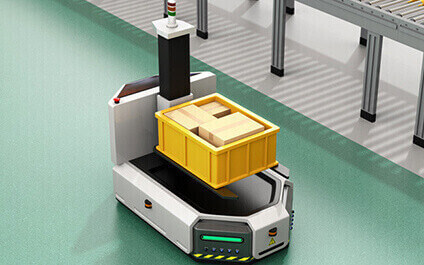
AGVs along with conveyors and automated sortation systems, are the backbone of traditional warehouse automation. These vehicles are designed to transport materials and goods from one point to another within a predefined route. Think of them as the reliable workhorses of logistics.
One of my first encounters with an AGV was between two conveyors that needed an area for people and occasionally forklifts to drive. The solution was an AGV conveyor that would traverse and connect the two conveyor lines, but most of the time leave the area open for people and forklift traffic.
While there are exceptions to every category, below are a few characteristics specific to AGVs:
1. Fixed Pathways
AGVs typically follow a set path that is either marked by magnetic strips, lasers, or embedded sensors in the floor. This makes their movement predictable and easy to manage.
2. Limited Flexibility
Due to their reliance on fixed paths, as well as being equipped with hardware specific for the specialized task it was designed to perform, AGVs are not ideal for dynamic environments where pathways or jobs might change frequently.
3. High Reliability & Low Downtime
Since AGVs operate on fixed routes, simpler tasks, and hardware specific to that task, they have a high degree of reliability and are less likely to encounter unexpected obstacles or challenges.
4. Lower Initial Cost
Generally, all of the above examples allow AGVs to have a lower upfront cost compared to AMRs because their technology is less complex and doesn’t require advanced sensors, additional hardware for job flexibility, or complex programming time.
What is an AMR?
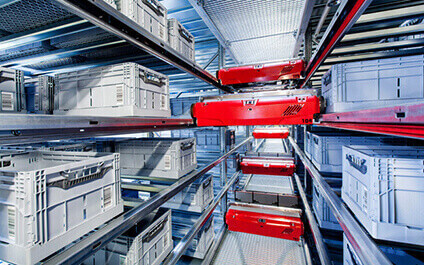
Autonomous Mobile Robots (AMRs) represent the next step in warehouse automation. Unlike AGVs, AMRs are designed to navigate complex and changing environments with greater flexibility and intelligence. Of course, this flexibility requires additional hardware, sensors/vision, and programming to make use of this flexibility.
Here are a few key characteristics of AMRs:
1. Dynamic Navigation
AMRs use advanced sensors, cameras, and AI algorithms to navigate and map out their surroundings. This allows them to avoid obstacles and adapt to changes in their environment.
2. High Flexibility
AMRs can re-route themselves based on real-time data and changing conditions, making them ideal for environments where tasks and pathways frequently change. In addition, many AMRs can handle varying degrees of loads, sizes of pallets or trays, and varying load and unload heights.
3. Enhanced Functionality
Equipped with sophisticated technology, AMRs can perform a wider range of tasks, including complex material handling and even interacting with other robots and systems.
4. Higher Initial Cost
Due to their advanced technology and capabilities, AMRs usually come with a higher initial investment. In many cases, AMRs are part of a larger overall automated warehouse system with high throughput demand. In cases like these, the high throughput will quickly recoup the high initial cost by their efficiency and adaptability.
5. Variety of Designs
AGVs tend to be more cart-like or slightly larger household robot vacuum-shaped, with the emphasis of vehicle in the name. Whereas with AMR they run the gamut from small carts like AGVs to humanoid, 4-legged dog-like, small Zamboni style, and everything in between.
AGVs vs. AMRs: Which One is Right for Your Operation?
There are several things to consider before implementing warehouse automation, such as budget constraints and existing systems.
1. Environment and Use Case
If your warehouse or facility has a stable layout with fixed pathways, AGVs might be sufficient. Standardized pallet shape without drastically varying weight? AGVs excel in predictable environments where tasks are routine and pathways are well-defined.
On the other hand, if you have a dynamic environment with frequent changes to picking and loading shapes and weights or complex layouts, AMRs offer the flexibility and intelligence needed to handle such scenarios effectively.
2. Budget Considerations
While AGVs are typically less expensive upfront, AMRs might offer greater long-term value due to their adaptability and ability to handle a wider range of tasks. Consider your budget and weigh the initial costs against the potential benefits of increased efficiency and flexibility.
3. Future Growth
If you anticipate significant changes or expansions in your operations, investing in AMRs might be a better choice. Perhaps a person-to-shelf pick system is not yet needed, but with higher output needed in the future, an AMR capable of this would be beneficial instead of buying a specialized AGV and then another AMR down the road.
The adaptability of an AMR ensures that they can grow with your business and adjust to new challenges without needing major modifications.
4. Integration with Existing Systems
Both AGVs and AMRs can be integrated with existing warehouse management systems (WMS) and other automation technologies. However, AMRs might offer more advanced integration capabilities due to their sophisticated sensors and software.
What’s in a name?
Whether you choose AGVs or AMRs, embracing automation is a step towards enhanced warehouse efficiency. While both AGVs and AMRs play crucial roles in modern logistics and warehouse operations, they cater to different needs and environments.
AGVs are reliable and cost-effective for stable, fixed-path scenarios, while AMRs offer advanced navigation and flexibility for dynamic and complex environments. Understanding the differences between these technologies will help you make an informed decision that aligns with your operational requirements and future goals.
MISUMI supplies components for both AGVs and AMRs, including: