


When it comes to the flow of fluids in a system, you need control!
Directional control solenoid valves (DCV) are electrically controlled valves that are used to direct the flow of fluids in a system. They are frequently paired with pneumatic or hydraulic cylinders to control the movement of the cylinder rod.
These valves can also be mounted to a manifold, allowing for the control of many different systems from a single location.
Let’s a take a closer look at how they work.
How Do Directional Control Solenoid Valves Work?
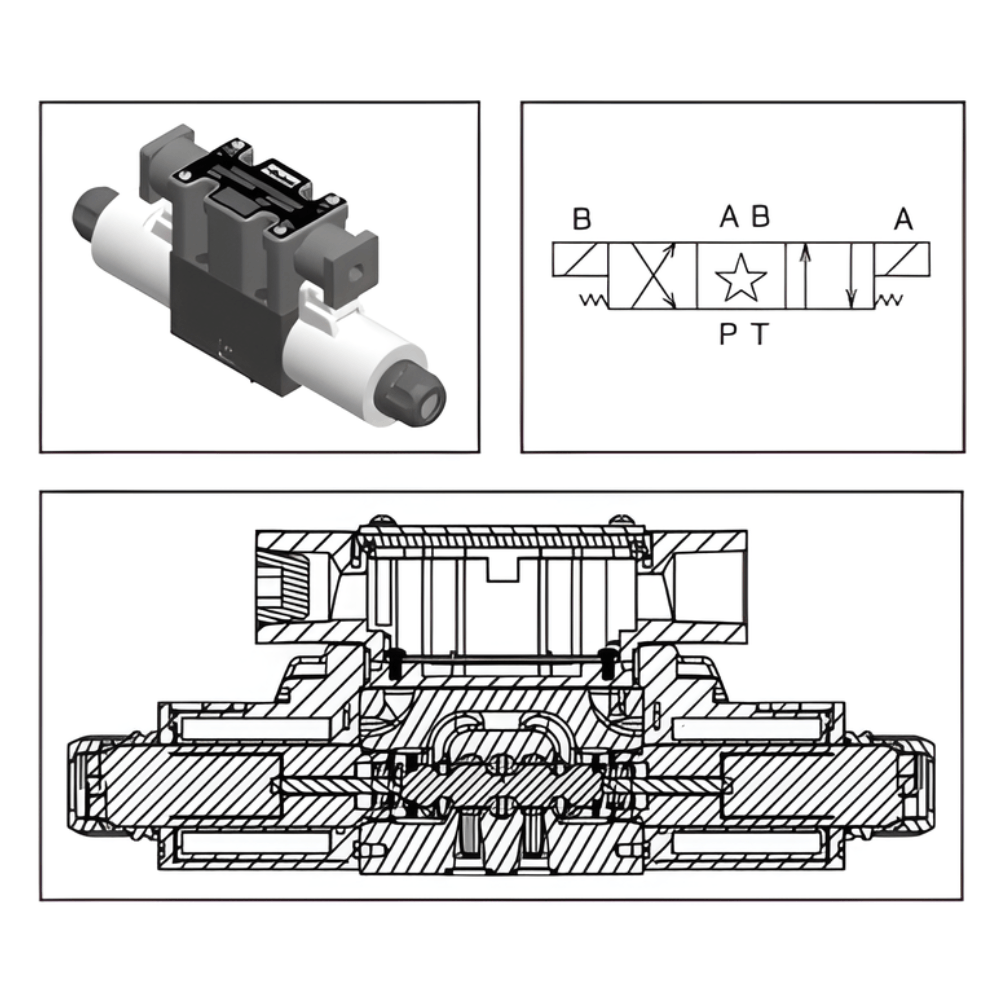
A solenoid is a coil of wire that, when powered, produces a magnetic field. A directional control solenoid valve uses that property to magnetically move the internal spool from one position to another, changing how the valve ports are connected. When the solenoid is no longer powered, a spring usually moves the valve back to its normal position.
Common Use Cases
Suitable for general hydraulics applications, directional control solenoid valves are most often used to electrically control double acting pneumatic or hydraulic cylinders, commonly with a 5-port, 3-position valve. The 5 ports of the valve usually connected to the pressure source, the head and rod ports of the cylinder, and their corresponding exhaust ports. The 3 positions of the valve are controlled by two solenoids on opposite sides of the valve.
When one solenoid is powered, the pressure source is connected to the head port, and the other end is connected to the exhaust, thus allowing the rod to extend. Powering the other solenoid reverses the ports, causing the cylinder to retract. The neutral (off) position usually will pressurize, exhaust or close off both ports of the cylinder, depending on the construction of the valve.
You can find these types of solenoid valves in a wide range of industries:
• Factory Automation
• Machine Tools
• Marine
• Material Handling
• Packaging Machinery
• Plastic Packaging
• Power Generation
• Primary Metal Refining/Process
• Vehicle Assembly Facilities
Directional Control Solenoid Valve Selection
Given that there are a tremendous number of solenoid valve configurations available, it is important to choose the right valve for the right application. As most solenoids have specific electrical requirements, it is important to make sure that the valve you select is compatible with your power supply.
The neutral position of the valve will need to be selected according to what ports, if any, need to be pressurized. Having the valve set to normally exhausting allows for manual manipulation of a cylinder, while normally pressurizing valves can lock the cylinder in place.

If a large number of valves need to be used at once, a valve manifold may be the right choice. Manifolds offer a common base to attach valves to, and can simplify the system by both acting as the pressure source and by consolidating the solenoid controls into a single electrical I/O port.
FIND MANIFOLD BASED SOLENOID VALVES
A maximum number of valve stations must be chosen with most manifolds, but unused stations can be sealed off if needed. Alternatively, some valves can be mounted together on a DIN rail, allowing for an indefinite number of valves to be placed in series.
| Individual Mounting | Valve Manifold | DIN Rail Mounting |
| 1-3 Valves | 4+ Valves Operating Together | Flexibile for Growing Systems |
MISUMI’s Wide Variety of Directional Control Solenoid Valves
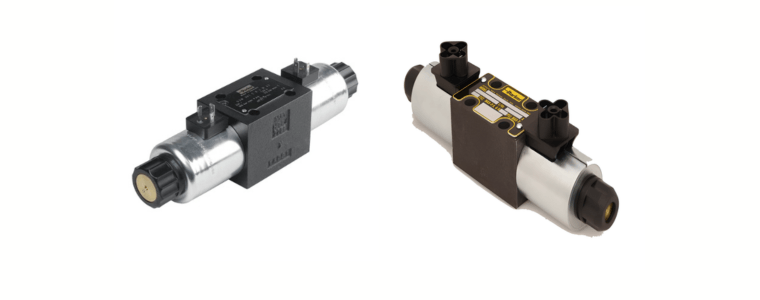
MISUMI has a huge variety of valves available that can be configured to suit every application in any environment. No matter what the need is, we always have a valve that can meet it. From single units to complex manifolds, we have it covered.
Check out MISUMI’s lineup and experience the convenience of our selection, including new Parker Hannifan DCVs.


