

Updated: October 17, 2024
The shape and geometry of a fastener screw head are often overlooked. The shape of the head where the fastener drive interface is located defines the head geometry.
After all, the geometry of the fastener head significantly impacts the form, fit, and function of fastened joint.
In this article, you’ll learn the most common head types and their use cases.
Most Common Fastener Screw Head Types
Here are some of the most common head types, including hex head and socket head, along with their uses and applications.
Hex Head Screw
Hex head screws are probably the most recognizable head types and are widely employed in bolts.
The hexagonal head allows for torque application using a wrench on the outside of the head and is thus different than an internal drive head type. This torque application is made possible thanks to the opposing flat head surfaces on the sides of the bolt.
These are typically found in “heavy duty” applications where the fastened joint must possess a large clamping force to function properly. Hex bolts accomplish this because it is possible to apply large torques directly to the hexagonal pattern on the bolt head.
The hexagonal heads can sustain significant torques that ensure that joints stay clamped together for long periods of time, meaning the bolt maintains the joint preload. These are used extensively in engineering applications such as pressurized piping, pressure vessels, and other fluid piping systems.

Flat Head Screw
Flat heads screws have heads that sit flat on the joint to make a contiguous surface on the part such that there is no protrusion of the head. These heads are sometimes called “countersunk” heads because they are designed to fit into mating countersink profiles on the joint.
These flat heads typically interface with a countersink and have a certain angle on their head such that they mate perfectly with the interfacing countersink. The most common is a flat 100° screw head, which gets its name from the 100° countersink angle on the head of the screw.
Flat head screws are used in wood-worked consumer products such as cabinetry and woodworking applications such as wood decking or door frame installation. This is because these components must have smooth, flat surfaces because parts slide across each other and must have sufficient clearance to accommodate movement.
Medical equipment also utilizes flat head screws, as many machines require cleaning and the flat surface is ideal.

Pan Head Screw
Pan head screws are the most common type of rounded head screw, and the most recognizable type is likely the Philips drive screw. These screw types are simply rounded head screws.
They get their name because when they are fastened within the joint, they sit with a round head protrusion, and the side profile above the joint is literally a semi-circular shape.
The pan head is similar to the button head except that it has tapered, truncated sides instead of a more rounded profile.

Button Head Screw
Button head screws have a rounded head style that tapers off to a flat interface, such that the top of the screw quite literally looks like a button while the bottom of the button head fastener is flat to the fastened joint.
These screw heads are typically used for internal socket-driven configurations and have a recessed area to accept a mating drive head.
Button head screws are not known for being used in high-strength applications but when a wider bearing surface or more finished look is needed.

Socket Head Cap Screw
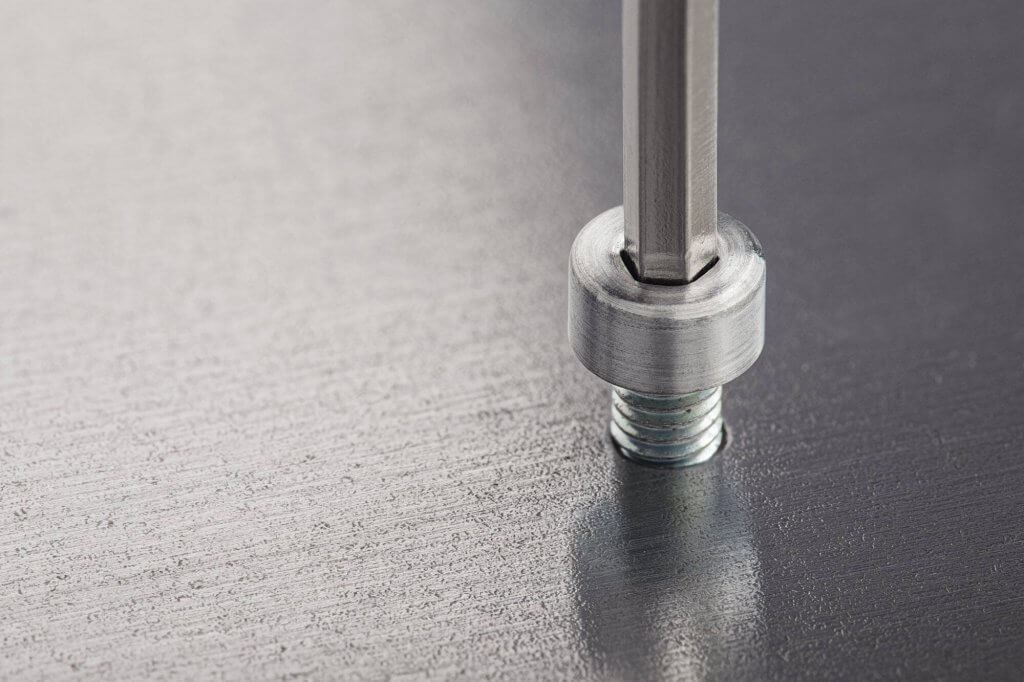
Socket head cap screws are a type of fastener head that has a hex recess cylindrical shape and can be tightened with a socket wrench. This design provides easy access to the drive as the head can be mounted flush with surrounding materials. They are also known for being a space-saving fastener due to their compact size.
Socket head cap screws are used in stamping dies, plastic injection molds, tooling, machinery, furniture, and where strength and aesthetics are priorities.

This quick profile has cracked the door wide open to the massive world of fastener head types and configurations.
MISUMI offers a wide range of fastener types to choose from, and you can explore them all here.


