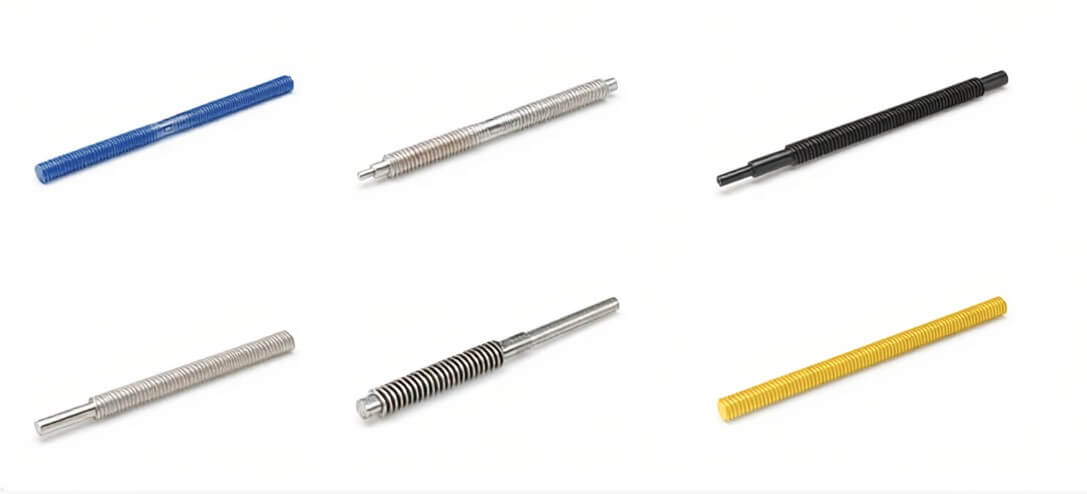

Lead screws are sometimes grouped with ball screws, belt drives, and hydraulic actuators, but they are usually selected for a different set of reasons. In many machines, the goal is not the fastest possible motion or the highest efficiency. The goal is steady, controlled travel with a mechanism that is easy to package, easy to understand, and capable of holding a load in place. That is why lead screws show up in a wide range of equipment, including linear actuators, 3D printers, lab instruments, lifting systems, and workholding fixtures. Below we break down five common applications and explain where lead screws make the most sense.
#1 Linear Actuators
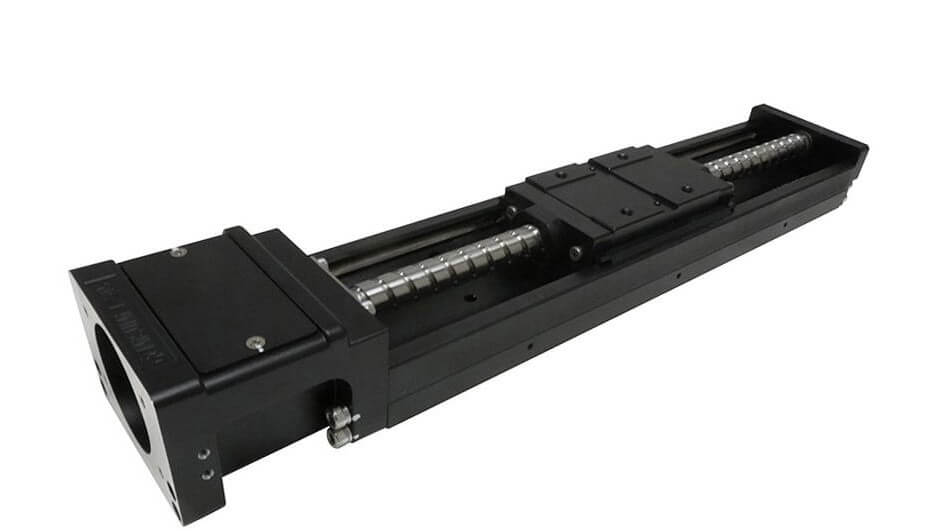
Linear actuators are one of the most common uses for lead screws. In these assemblies, a motor turns the screw, and the nut, carriage, or rod moves in a straight line. This motion can be used to push, pull, raise, lower, or position a load.
Lead screws work well here because they provide controlled movement over a set distance without requiring a complex drive system. They are typically used when smooth, repeatable travel is more important than high speed. Common examples include adjustable workstations, packaging equipment, small lifting systems, and factory automation mechanisms.
#2 3D Printers and CNC Machines
Lead screws are often used to move machine axes in 3D printers, CNC routers, engraving machines, and other small-format equipment. In many 3D printers, they are used on the Z-axis to raise or lower the print head or build platform. In CNC machines, they may be used to adjust tool height or move a worktable with controlled linear motion.
They work well in these applications because they can provide accurate positioning over short to moderate travel distances. Compared with belt drives, lead screws can offer more rigidity in certain setups, especially where the axis needs to support weight or resist movement when stopped. This is one reason they are commonly used for vertical motion.
#3 Lifting and Height Adjustment Systems
Lifting and height-adjustment systems use a screw mechanism to raise, lower, or support a load with steady vertical movement. As the screw rotates, the connected nut, platform, or carriage moves to the required height.
This setup works well for slower lifting applications because it can handle compressive loads and provide precise adjustment. In many designs, the thread geometry and friction also help resist back-driving, which can keep the load from moving when the system stops.
Common examples include scissor lifts, adjustable tables, platform lifts, machine leveling systems, and industrial height-adjustment fixtures.

#4 Medical and Laboratory Equipment
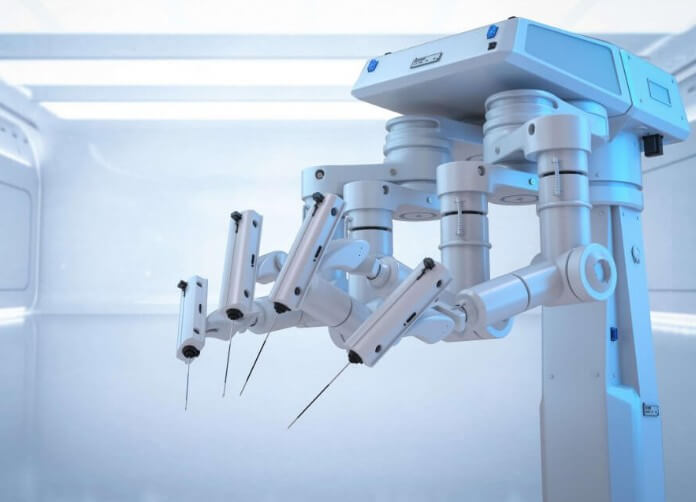
Medical and laboratory equipment relies on screw-driven motion to move small stages, slides, pumps, and positioning mechanisms. These systems typically need smooth, controlled travel and fine adjustment rather than high-speed movement.
A lead screw can fit into a compact assembly while providing steady, repeatable positioning. This makes it useful for handling samples, controlling fluid delivery, or adjusting the position of a patient, instrument, or imaging component.
Common examples include syringe pumps, sample positioning stages, imaging equipment, adjustable medical chairs and beds, and laboratory automation systems.
#5 Clamping, Pressing, and Fixturing
Clamps, presses, and fixtures use lead screws to apply steady pressure to a workpiece. Turning the screw moves a jaw, plate, or contact point forward, allowing the operator to control both the position and the amount of force applied.
The threaded mechanism provides mechanical advantage, making it possible to generate substantial clamping force with relatively little input. It also allows pressure to be increased gradually, which is useful when aligning, assembling, holding, or testing parts.
Common examples include bench vises, assembly fixtures, manual presses, workholding clamps, and inspection or testing fixtures.
A few more examples of lead screws being used in builds:
Parting Thoughts
MISUMI USA carries a wide range of linear motion parts and components including linear shafts, linear actuators, ball screws, and more. If you have any questions about linear motion concerns for your next project or fix, please feel free to contact our product experts and engineers. For more insights about lead screws and other manufacturing-related articles, be sure to check out Lead Screws vs. Ball Screws, and Lead Screws: Uses, Types, & Advantages.